

Eclipse Onion Seed
Quick Facts
-
Latin Name
-
Allium cepa
-
Days To Maturity
Days To Maturity
Average number of days from seeding date to harvest, within a specific crop group. If a transplanted crop: average number of days from transplant date. Not sure if crop is direct-seeded or transplanted? Check the Growing Information box for details. If crop can be both direct-seeded or transplanted, days to maturity refers to direct seeding. Days to maturity for all flowers and herbs is calculated from seeding date.
Close
-
60 Days
-
Hybrid Status
Hybrid Status
Hybrid: The offspring of a cross between two or more distinct parent lines, usually of same species, and selected for improved traits.
Close
Open-pollinated: A non-hybrid variety that can reproduce itself in kind, demonstrating relatively stable traits from one generation to the next. -
Open Pollinated
Eclipse Onion Seed
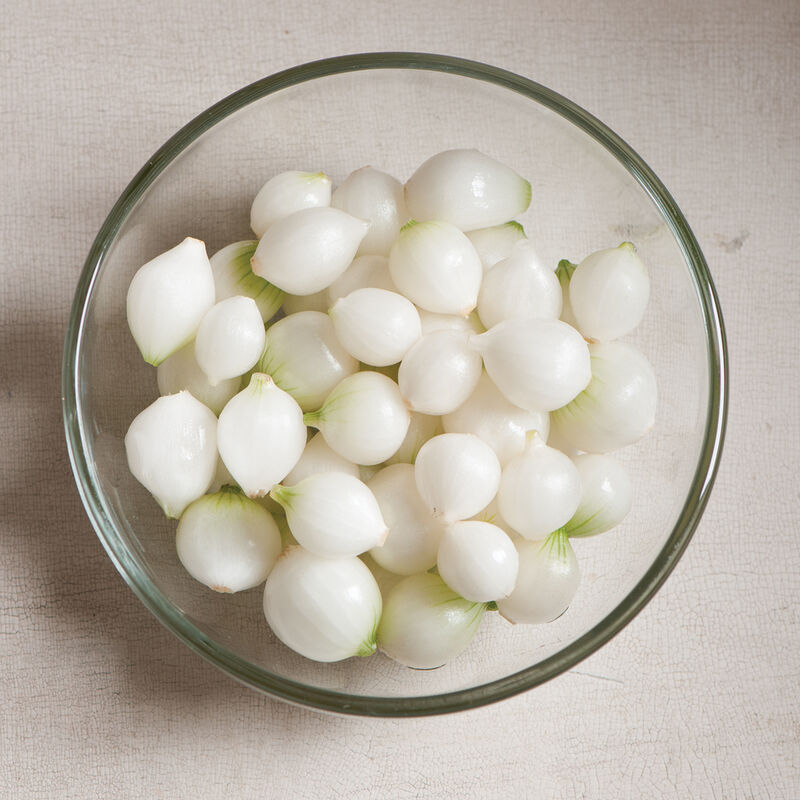
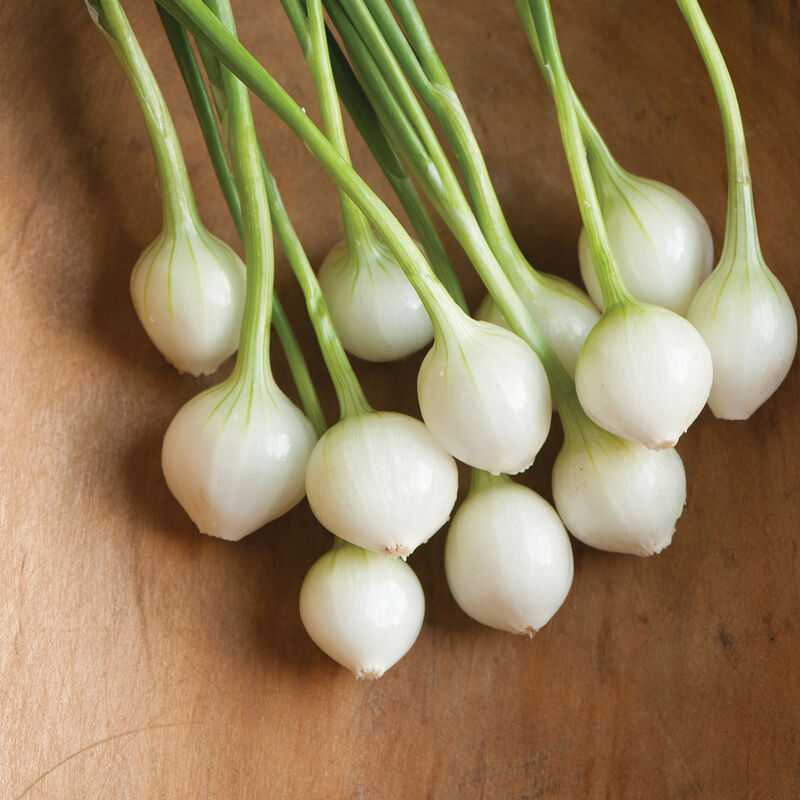
White onion for bunching or pearl size.
Eclipse is a short-day onion that can be grown in long-day areas to produce mini or pearl onions. Mild flavor. Seeding rate can be adjusted to get onions of desired size, or thin after seedlings are established. Best at 40° latitude and higher.Specs:
Quick Facts
-
Latin Name
-
Allium cepa
-
Days To Maturity
Days To Maturity
Average number of days from seeding date to harvest, within a specific crop group. If a transplanted crop: average number of days from transplant date. Not sure if crop is direct-seeded or transplanted? Check the Growing Information box for details. If crop can be both direct-seeded or transplanted, days to maturity refers to direct seeding. Days to maturity for all flowers and herbs is calculated from seeding date.
Close
-
60 Days
-
Hybrid Status
Hybrid Status
Hybrid: The offspring of a cross between two or more distinct parent lines, usually of same species, and selected for improved traits.
Close
Open-pollinated: A non-hybrid variety that can reproduce itself in kind, demonstrating relatively stable traits from one generation to the next. -
Open Pollinated
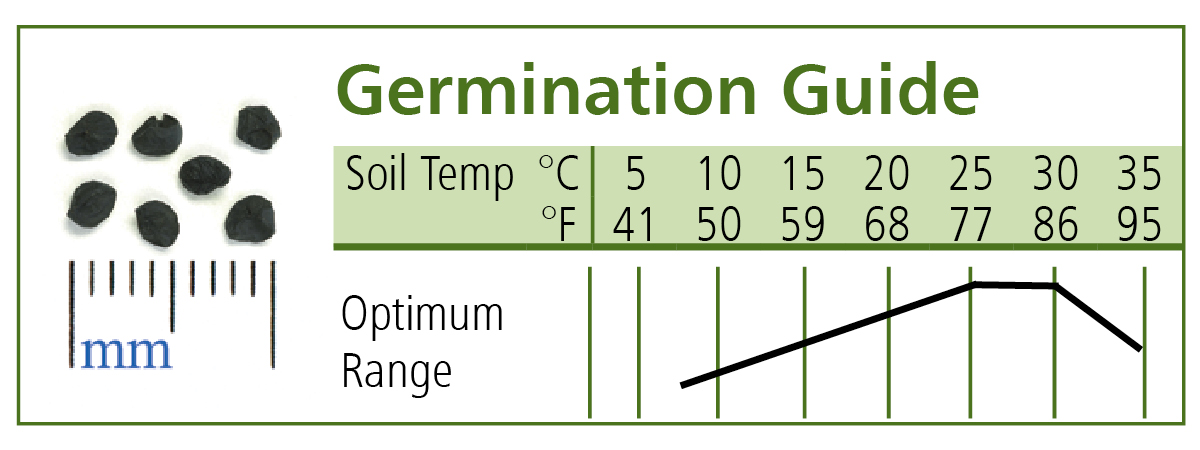
CULTURE: Sow in early spring in 2-4" wide bands or single rows 4" apart, about 1/2" between seeds. Cover 1/4- 1/2". Thinning is not necessary. Keep free of weeds. As with all onions, full sun, consistent soil moisture, and a fertile soil with a pH of 6.2-6.8 are preferable.
HARVEST: Pull by the bunch whenever needed. No skin forms until 2-3 months into the season, making mini onions easy to wash and prepare.
ADAPTATION: Mini onions are smaller and earlier to bulb the further north they are grown. Suited to 40° and higher latitudes for pearl and cipollini onions, for small to medium onions at lower latitudes.
AVG. DIRECT SEEDING RATE: 5M/50', 1 oz./80', 13 oz./1,000', 34 lb./acre at 96 seeds/ft. in 4" wide bands, in rows 12" apart.
SIZED SEEDS: All seeds are unsized.
SEED SPECS: SEEDS/LB.: 113,700-134,300 (avg. 123,300).
PACKET: 1,000 seeds.
Johnny's is committed to your success, every step of the way.
We want you, our customer, to be 100% satisfied with all of our seeds, tools, and supplies.
If anything you purchase from us proves unsatisfactory, we will either replace the item or refund the purchase price.