

Storage No. 4 (F1) Cabbage Seed
Quick Facts
-
Latin Name
-
Brassica oleracea var. capitata
-
Days To Maturity
Days To Maturity
Average number of days from seeding date to harvest, within a specific crop group. If a transplanted crop: average number of days from transplant date. Not sure if crop is direct-seeded or transplanted? Check the Growing Information box for details. If crop can be both direct-seeded or transplanted, days to maturity refers to direct seeding. Days to maturity for all flowers and herbs is calculated from seeding date.
×
-
95 days
-
Life Cycle
Life Cycle
Plants can be Annuals (single growing season), Perennials (grow year after year), Tender Perennials (grow year after year in warmer climates; and in some cases when given special protection in colder climates), or Biennials (require two years to mature).
× -
Annual
-
Disease Resistance Codes
Disease Resistance Codes
- FY
- Fusarium Yellows
-
FY
-
Hybrid Status
Hybrid Status
Hybrid: The offspring of a cross between two or more distinct parent lines, usually of same species, and selected for improved traits.
×
Open-pollinated: A non-hybrid variety that can reproduce itself in kind, demonstrating relatively stable traits from one generation to the next. -
Hybrid (F1)
-
Product Features
Product Features
-
 Cold Tolerant
- Cold Tolerant
-
 Easy Choice
- Variety is easy-to-grow.
-
-
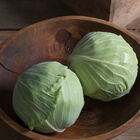
Storage No. 4 (F1) Cabbage Seed
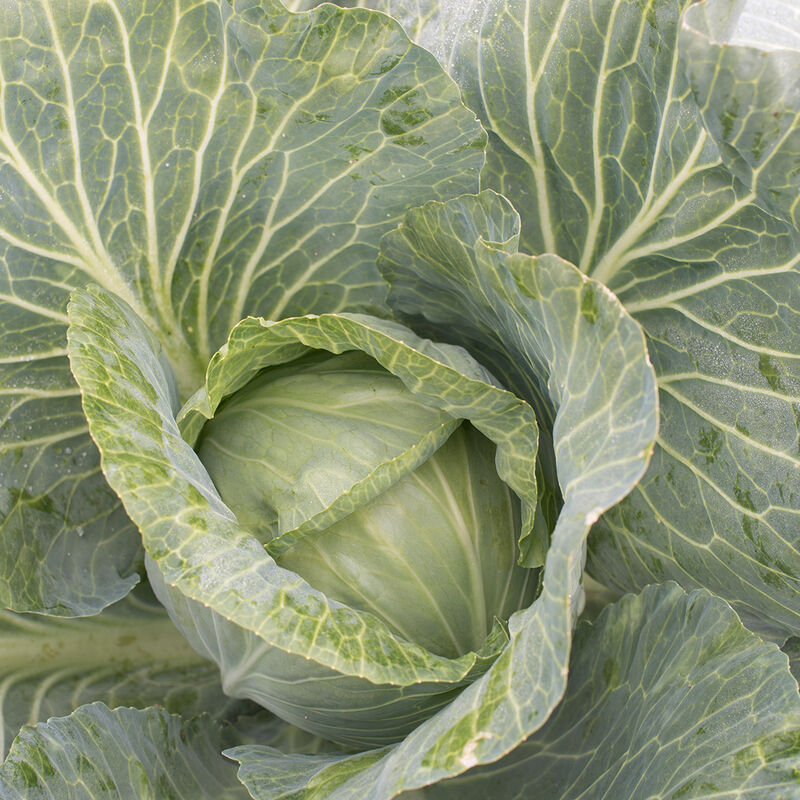
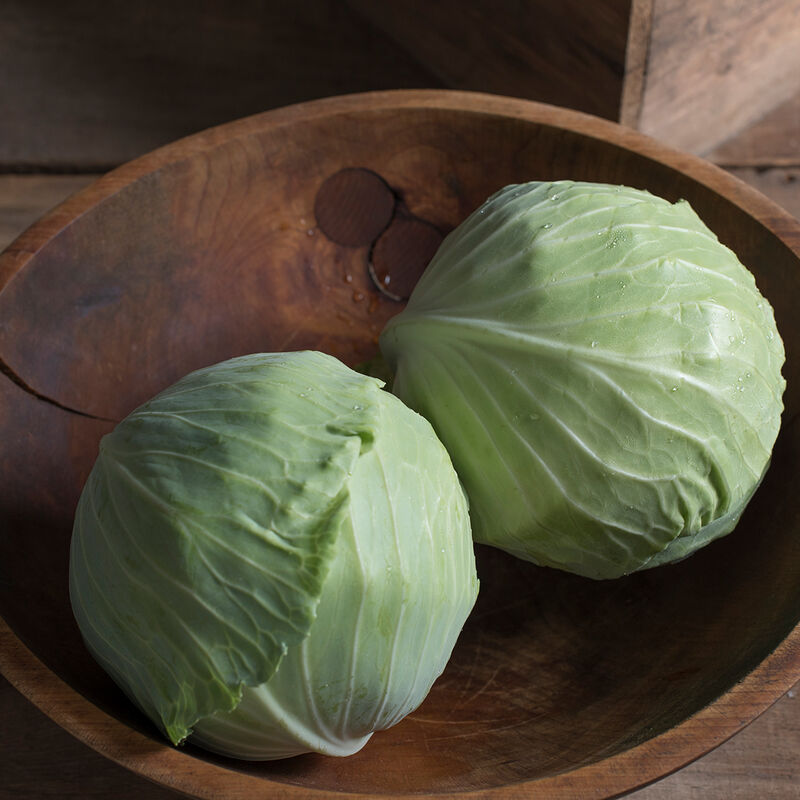
Excellent eating quality from storage.
For fresh use, storage, and sauerkraut. Makes nice cabbage even under fertility or weather stress. Firms up in as few as 75 days for fresh use, continuing to enlarge to 4–8 lb. for mid-fall harvest. The solid heads have delicious, crisp leaves, and are capable of long-term storage into spring. Flavor is superior to the typical cabbages available at the supermarket. Developed by cabbage breeder Don Reed, Cortland, NY.Disease Resistance:
Fusarium Yellows (High)
Specs:
Quick Facts
-
Latin Name
-
Brassica oleracea var. capitata
-
Days To Maturity
Days To Maturity
Average number of days from seeding date to harvest, within a specific crop group. If a transplanted crop: average number of days from transplant date. Not sure if crop is direct-seeded or transplanted? Check the Growing Information box for details. If crop can be both direct-seeded or transplanted, days to maturity refers to direct seeding. Days to maturity for all flowers and herbs is calculated from seeding date.
×
-
95 days
-
Life Cycle
Life Cycle
Plants can be Annuals (single growing season), Perennials (grow year after year), Tender Perennials (grow year after year in warmer climates; and in some cases when given special protection in colder climates), or Biennials (require two years to mature).
× -
Annual
-
Disease Resistance Codes
Disease Resistance Codes
- FY
- Fusarium Yellows
-
FY
-
Hybrid Status
Hybrid Status
Hybrid: The offspring of a cross between two or more distinct parent lines, usually of same species, and selected for improved traits.
×
Open-pollinated: A non-hybrid variety that can reproduce itself in kind, demonstrating relatively stable traits from one generation to the next. -
Hybrid (F1)
-
Product Features
Product Features
-
Cold Tolerant
- Cold Tolerant
-
Easy Choice
- Variety is easy-to-grow.
-
-
- This product does not ship to the following countries: United Arab Emirates, Austria, Australia, Barbados, Belgium, Bulgaria, Bermuda, Bahamas, Switzerland, Cyprus, Czech Republic, Germany, Denmark, Estonia, Spain, Finland, France, United Kingdom, Greece, Hong Kong, Croatia, Hungary, Ireland, Iceland, Italy, Japan, Republic of Korea, Kuwait, Cayman Islands, Lithuania, Luxembourg, Latvia, Malta, Netherlands, Norway, New Zealand, Oman, Poland, Portugal, Qatar, Romania, Saudi Arabia, Sweden, Singapore, Slovenia, Slovakia, San Marino, Thailand, Trinidad and Tobago, Taiwan, Ukraine.
SCIENTIFIC NAME:
Brassica oleraceaCULTURE:
Cabbage, as well as cauliflower, Brussels sprouts, broccoli, and related brassicas, are heavy feeders. They require fertile soils in a pH range of 6.5-7.5, supplied with consistent irrigation throughout the growing period.DAYS TO MATURITY:
From date of cool weather/spring transplanting. Subtract 10-14 days for late spring or early summer/warm weather transplanting. Add about 14 days for direct seeding.TRANSPLANTING:
Early spring crop: Use early and midseason varieties. Sow 2 seeds per cell in 50- or 72-cell plug flats, 3-4 seeds/in. in 20-row flats, or in outdoor beds 1/4" deep. Seedlings should be ready to transplant in 4-6 weeks. If possible, keep soil temperature over 75°F (24°C) until germination, then reduce air temperature to about 60°F (16°C). Transplant outdoors 4-6 weeks after sowing 12-18" apart in rows 18-36" apart. Cabbage prefers cooler growing temperatures, between 55-75°F (13-24°C), optimum being 60-70°F (16-21°C) but will produce good crops under warmer summer conditions. Fall crop: Use midseason and storage varieties. Start seedlings as above in May and transplant to the garden in June/July. To ensure mature heads, seed the crop early in areas where heavy freezes occur early in fall. Winter crop: Successful cabbage crops can be grown where winters are mild (temperatures rarely below 32°F/0°C). Transplants can be set out from September to February in these regions.DIRECT SEEDING:
Sow 3-4 seeds 12" apart, 1/2" deep, rows 24-36" apart, thinning to one plant in each group.AVG. DIRECT SEEDING RATE:
100 seeds/50', 500 seeds/250', 1M/500', 29M/acre at 2 seeds/ft. with rows 36" apart.CROP MAINTENANCE (SPLITTING):
Early varieties may split or burst at maturity or from rapid new growth if rain or heavy irrigation follows a dry spell. Splitting may be partially avoided by slowing a plant's growth. To accomplish this, cultivate close to plants to sever some of the root system, or by slightly twisting the plant.INSECT PESTS:
Repel flea beetles and root maggots on young seedlings by covering with floating row covers from day of planting. Treat flea beetles with insecticides such as pyrethrin or azadirachtin if heavy pressure is observed. For cabbage worms and loopers, use Bacillus thuringiensis (Bt). Cutworm prevention: Cultivate soil 2-4 weeks before planting to work in cover crops and destroy weeds.DISEASE:
Adhere strictly to a preventive program including: (1) long crop rotations with non-brassica crops, (2) clean starting mixes and outdoor seedbeds, and (3) strict sanitation practices. Johnny's Selected Seeds only sells seed lots of cabbage that have tested negative for black rot (Xanthomonas campestris pv. campestris) and black leg (Phoma lingam).HARVEST AND STORAGE:
Relatively young heads (still green and actively growing) store best. Ideal conditions are 32°F (0°C), at 95-98% relative humidity, with good air circulation. Store only disease-free heads.SIZED SEEDS:
"Sized" seeds have been sorted so they are roughly the same size. This consistency allows for more accurate spacing with mechanical seeders and more even germination. Cabbage seeds are sized, except when noted in the product description.SEEDS/LB.:
67,500-164,300 (avg. 108,600).PACKET:
100 seeds, unless otherwise noted.Johnny's is committed to your success, every step of the way.
We want you, our customer, to be 100% satisfied with all of our seeds, tools, and supplies.
If anything you purchase from us proves unsatisfactory, we will either replace the item or refund the purchase price.