

Japanese Millet Organic Cover Crop Seed
Quick Facts
-
Latin Name
-
Echinochloa esculenta
-
Days To Maturity
Days To Maturity
Average number of days from seeding date to harvest, within a specific crop group. If a transplanted crop: average number of days from transplant date. Not sure if crop is direct-seeded or transplanted? Check the Growing Information box for details. If crop can be both direct-seeded or transplanted, days to maturity refers to direct seeding. Days to maturity for all flowers and herbs is calculated from seeding date.
×
-
50-70 to bloom; 60-90 for grain production
-
Life Cycle
Life Cycle
Plants can be Annuals (single growing season), Perennials (grow year after year), Tender Perennials (grow year after year in warmer climates; and in some cases when given special protection in colder climates), or Biennials (require two years to mature).
× -
Annual
-
Hybrid Status
Hybrid Status
Hybrid: The offspring of a cross between two or more distinct parent lines, usually of same species, and selected for improved traits.
×
Open-pollinated: A non-hybrid variety that can reproduce itself in kind, demonstrating relatively stable traits from one generation to the next. -
Open Pollinated
-
Product Features
Product Features
-
 Organic Seeds, Plants, and Supplies
-
Plants, or seeds harvested from plants, that have been grown without synthetic fertilizers or pesticides, strictly adhering to the USDA's National Organic Standards Board (NOSB) organic gardening practices are designated as Organic.
Supplies that meet the USDA's National Organic Program (NOP) rules according to a third-party authority such as OMRI, WSDA, and/or a local authority such as MOFGA or NOFA.
-
-
Japanese Millet Organic Cover Crop Seed
New! Fast summer weed suppression.
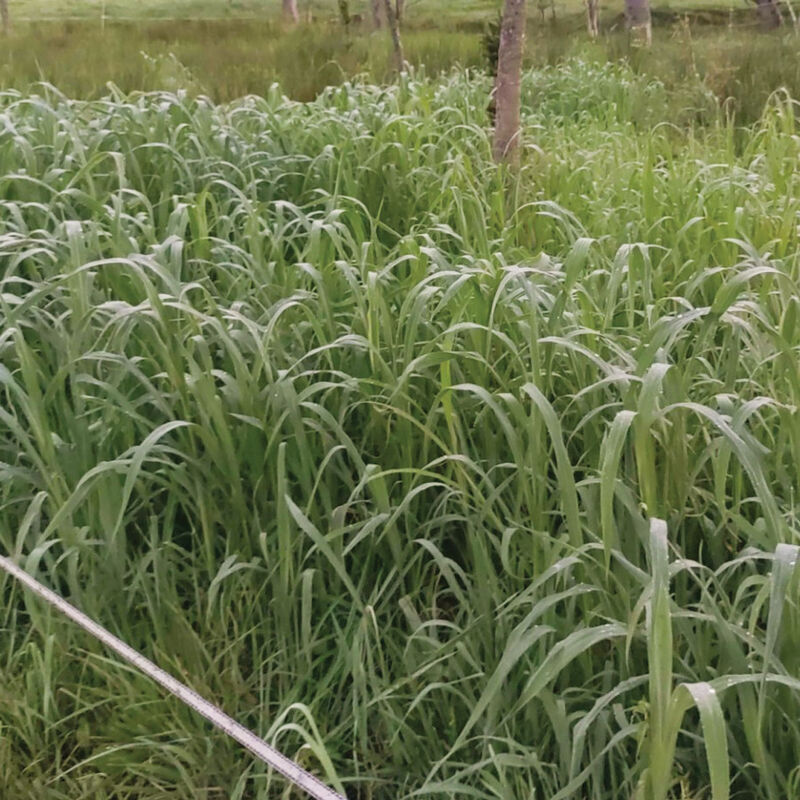
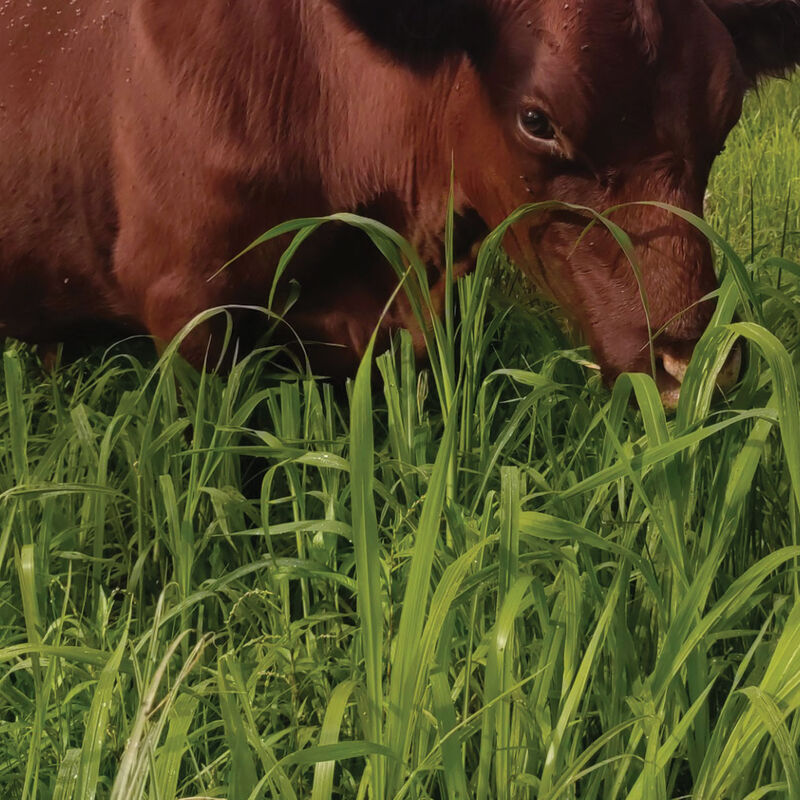
Japanese millet is an upright, warm-season annual grass that emerges quickly, typically within 3–5 days, making it a highly effective summer ground cover with strong weed suppression and fast residue breakdown. We find it thrives in wet or even waterlogged soils and has performed exceptionally well on our Research Farm in Albion, Maine, even in low-pH, low-fertility conditions where other cover crops struggle. It also regrows quickly after grazing and remains reliable when planted throughout the summer months. Japanese millet contains no prussic acid, making it a safe forage option. Its dependable winter-kill makes it an excellent choice for growers seeking a cover crop that terminates cleanly without additional management. As it can reach a height of 3–5', it benefits from regular mowing to maintain manageability. USDA Certified Organic.Specs:
Quick Facts
-
Latin Name
-
Echinochloa esculenta
-
Days To Maturity
Days To Maturity
Average number of days from seeding date to harvest, within a specific crop group. If a transplanted crop: average number of days from transplant date. Not sure if crop is direct-seeded or transplanted? Check the Growing Information box for details. If crop can be both direct-seeded or transplanted, days to maturity refers to direct seeding. Days to maturity for all flowers and herbs is calculated from seeding date.
×
-
50-70 to bloom; 60-90 for grain production
-
Life Cycle
Life Cycle
Plants can be Annuals (single growing season), Perennials (grow year after year), Tender Perennials (grow year after year in warmer climates; and in some cases when given special protection in colder climates), or Biennials (require two years to mature).
× -
Annual
-
Hybrid Status
Hybrid Status
Hybrid: The offspring of a cross between two or more distinct parent lines, usually of same species, and selected for improved traits.
×
Open-pollinated: A non-hybrid variety that can reproduce itself in kind, demonstrating relatively stable traits from one generation to the next. -
Open Pollinated
-
Product Features
Product Features
-
Organic Seeds, Plants, and Supplies
-
Plants, or seeds harvested from plants, that have been grown without synthetic fertilizers or pesticides, strictly adhering to the USDA's National Organic Standards Board (NOSB) organic gardening practices are designated as Organic.
Supplies that meet the USDA's National Organic Program (NOP) rules according to a third-party authority such as OMRI, WSDA, and/or a local authority such as MOFGA or NOFA.
-
-
- This product does not ship to the following countries: United Arab Emirates, Austria, Australia, Barbados, Belgium, Bulgaria, Bermuda, Bahamas, Switzerland, Cyprus, Czech Republic, Germany, Denmark, Estonia, Spain, Finland, France, United Kingdom, Greece, Hong Kong, Croatia, Hungary, Ireland, Iceland, Italy, Japan, Republic of Korea, Kuwait, Cayman Islands, Lithuania, Luxembourg, Latvia, Malta, Netherlands, Norway, New Zealand, Oman, Poland, Portugal, Qatar, Romania, Saudi Arabia, Sweden, Singapore, Slovenia, Slovakia, San Marino, Thailand, Trinidad and Tobago, Taiwan, Ukraine.
- This product does not ship to the following states and jurisdictions: HI, ID.
Culture: Pearl millet, Japanese millet, and sudangrass are warm season crops, so wait until the threat of frost has passed and the soil has warmed to 65–85° F (18–29° C) before planting. Sow ½-1" deep using a push seeder or grain drill. If broadcasting, seed at a higher rate and lightly harrow or press in with a cultipacker to ensure good germination. Millet and sudangrass can grow to heights up to 8', but periodic mowing can be used to keep height under control. Leave 4–6" of stubble with each mowing to encourage regrowth. Pearl Millet: Well adapted to growing areas characterized by drought, low soil fertility, and high temperatures. Because of its tolerance to difficult growing conditions, it can be grown in areas where other grain crops, such as corn or wheat, would not survive. Japanese Millet: Contrary to Pearl Millet, Japanese Millet thrives in low-lying areas with heavy, wet, or clay soils, and performs exceptionally well under high moisture conditions, including poorly drained soils and even standing water. Japanese millet can be broadcast or planted in narrow rows, allowing for flexible establishment in challenging, moisture-prone fields where many upland crops struggle. Sudangrass: Decomposing sudangrass exudes a nematocidal acid which reduces nematode and symphylan populations. To avoid allelopathic effects or nitrogen tie-up in subsequent crops, ensure sufficient time for decomposition before sowing a small-seeded crop. This is best accomplished by allowing sudangrass to winterkill before planting the following spring.
Seeding Rate: Millet: ½–1 lb./1,000 sq.ft.; 12–25 lb./acre. Sudangrass: 1–2 lb./1,000 sq.ft.; 30–40 lb./acre.
Light/Soil Requirements: Pearl Millet: Full sun in well-drained soil. It performs well in soils with high salinity or low pH, but prefers a pH of 6.0. Japanese Millet: Full sun. Performs well in wet or even waterlogged soils, and in low-pH, low-fertility conditions, but prefers a pH of 6.0. Sudangrass: Full sun. Performs best with good fertility but will grow in lower fertility soils. For maximum biomass, ensure sufficient nitrogen. Tolerates drought.
Height: 8'+
Harvest: Three to five cuttings per season are possible. Mow before incorporating into soil. 75–80 days to mature hay, 105 days to seed. Caution: Do NOT harvest sudangrass for forage after a frost as prussic acid levels may become toxic for livestock.
Termination: Due to their fast growth and substantial biomass, it is important to have appropriate equipment to properly manage these crops. Tractor-mounted flail, sickle bar, and rotary mowers will work, but smaller equipment may struggle. Millet and sudangrass will winterkill when exposed to frost, offering an alternative management option for growers without heavy equipment.
Johnny's is committed to your success, every step of the way.
We want you, our customer, to be 100% satisfied with all of our seeds, tools, and supplies.
If anything you purchase from us proves unsatisfactory, we will either replace the item or refund the purchase price.