

Oregon Giant Pea Seed
Quick Facts
-
Latin Name
-
Pisum sativum
-
Days To Maturity
Days To Maturity
Average number of days from seeding date to harvest, within a specific crop group. If a transplanted crop: average number of days from transplant date. Not sure if crop is direct-seeded or transplanted? Check the Growing Information box for details. If crop can be both direct-seeded or transplanted, days to maturity refers to direct seeding. Days to maturity for all flowers and herbs is calculated from seeding date.
×
-
60 days
-
Life Cycle
Life Cycle
Plants can be Annuals (single growing season), Perennials (grow year after year), Tender Perennials (grow year after year in warmer climates; and in some cases when given special protection in colder climates), or Biennials (require two years to mature).
× -
Annual
-
Disease Resistance Codes
Disease Resistance Codes
- F
- Fusarium Wilt
- PEMV
- Pea Enation Mosaic Virus
- PM
- Powdery Mildew
-
F ,
PEMV ,
PM
-
Hybrid Status
Hybrid Status
Hybrid: The offspring of a cross between two or more distinct parent lines, usually of same species, and selected for improved traits.
×
Open-pollinated: A non-hybrid variety that can reproduce itself in kind, demonstrating relatively stable traits from one generation to the next. -
Open Pollinated
Oregon Giant Pea Seed
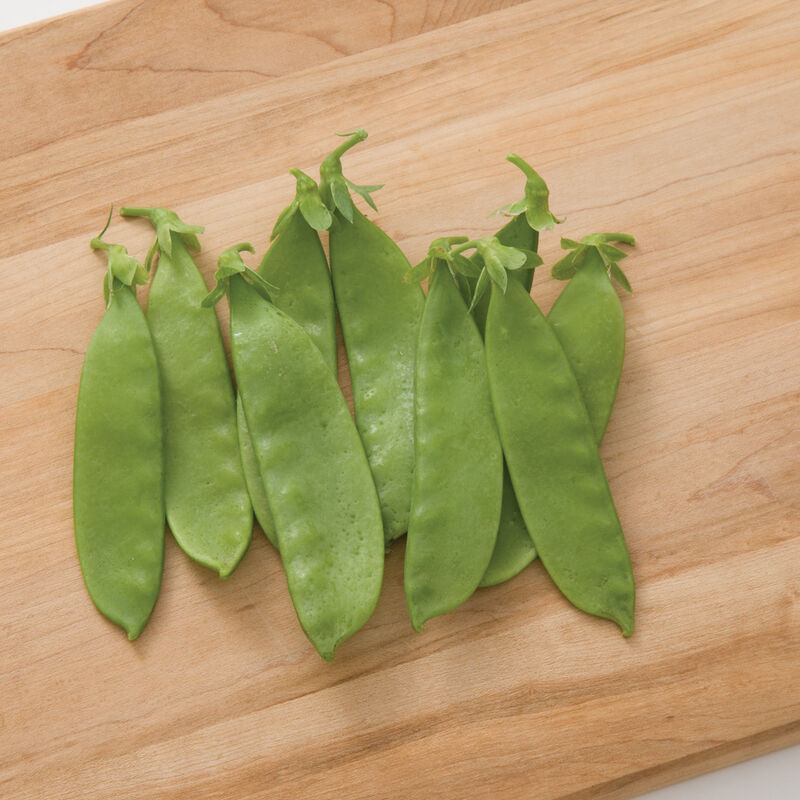
Large tender snow pea pods.
Abundant yields of medium-green pods up to 4 1/2" long x 1" wide. The 30" tall, white-flowered vines produce 1 to 2 pods per node. Bred by the late Dr. James Baggett of Oregon State University.Disease Resistance:
Fusarium Wilt races 1 (High)
Specs:
Quick Facts
-
Latin Name
-
Pisum sativum
-
Days To Maturity
Days To Maturity
Average number of days from seeding date to harvest, within a specific crop group. If a transplanted crop: average number of days from transplant date. Not sure if crop is direct-seeded or transplanted? Check the Growing Information box for details. If crop can be both direct-seeded or transplanted, days to maturity refers to direct seeding. Days to maturity for all flowers and herbs is calculated from seeding date.
×
-
60 days
-
Life Cycle
Life Cycle
Plants can be Annuals (single growing season), Perennials (grow year after year), Tender Perennials (grow year after year in warmer climates; and in some cases when given special protection in colder climates), or Biennials (require two years to mature).
× -
Annual
-
Disease Resistance Codes
Disease Resistance Codes
- F
- Fusarium Wilt
- PEMV
- Pea Enation Mosaic Virus
- PM
- Powdery Mildew
-
F ,
PEMV ,
PM
-
Hybrid Status
Hybrid Status
Hybrid: The offspring of a cross between two or more distinct parent lines, usually of same species, and selected for improved traits.
×
Open-pollinated: A non-hybrid variety that can reproduce itself in kind, demonstrating relatively stable traits from one generation to the next. -
Open Pollinated
- This product does not ship to the following countries: Japan, Republic of Korea, New Zealand, Taiwan.
SCIENTIFIC NAME:
Pisum sativumCULTURE:
Peas are a cool-weather crop. Midsummer pickings are not as prolific as earlier harvests. For best yields ensure adequate fertility and a pH of 6.5-6.8. Adjust pH with ground limestone or wood ashes, ideally in the fall prior to spring planting. Inoculate peas to encourage formation of nitrogen-producing nodules on the plant roots. This enriches the soil, results in larger plants, and increases yield.DAYS TO MATURITY:
From date of direct seeding.DIRECT SEEDING:
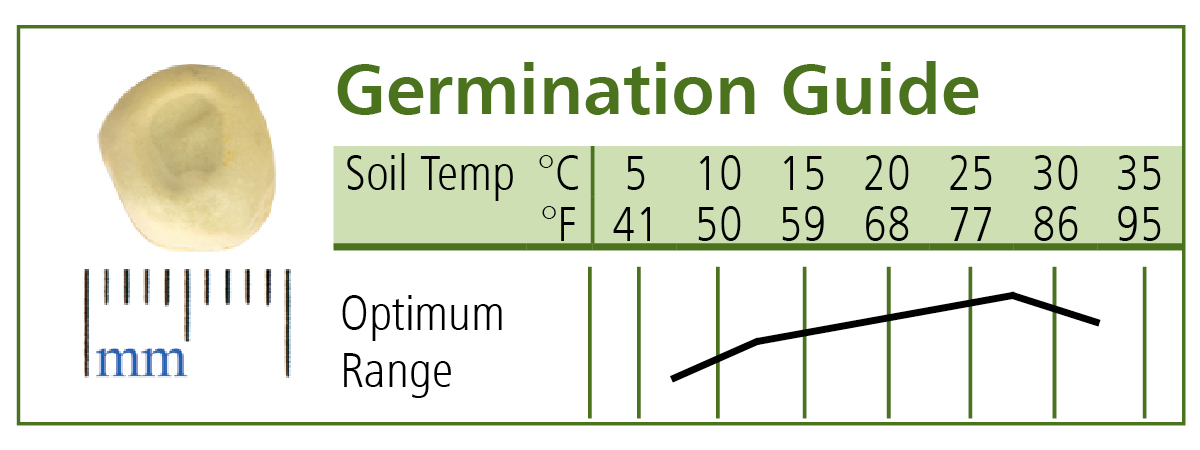
Spring crop: In early spring as soon as the soil can be worked, sow 1 1/2-2" apart in rows 18-36" apart, 1/2-1" deep. Do not thin. Varieties under 3' tall can be sown without support in rows 12-18" apart. For taller varieties, use crop supports such as a trellis net or chicken wire to keep vines upright, easy to pick and off the ground where they are less likely to rot if rainy weather coincides with harvest. Suspend the bottom of the trellis or chicken wire just above the young plants. The best time to install a trellis is at planting time. Normal row spacing is 4-6' for trellised peas. Fall crop: Variety selection is key. Choose powdery mildew-resistant varieties and early maturing varieties that will still flower in diminishing daylight. Sow about 2 months before frost. Keep seeds well-watered to encourage good germination.AVG. DIRECT SEEDING RATE: 1 lb. per 80', 13 lb./1,000', 272 lb./acre at 25 seeds/ft., in rows 24" apart.DISEASE:
A common disease is pea root rot (Fusarium sp. or Aphanomyces euteiches) which causes yellowing and die-back of foliage from the ground up. The best control is to ensure well-drained soil and to rotate crops out of legumes for at least three years. Powdery mildew causes white, powdery mold on the leaves, stems, and pods in hot weather. Choose resistant varieties.HARVEST:
Pick when peas enlarge in the pods.TREATED SEEDS: Treated seeds are less susceptible to rotting in prolonged cold, wet weather. Treated seeds are identified with a "T" in their part number.SEEDS/LB.:
1,450-3,400 (avg. 2,200).PACKET:
250 seeds, sows 30-40'.Johnny's is committed to your success, every step of the way.
We want you, our customer, to be 100% satisfied with all of our seeds, tools, and supplies.
If anything you purchase from us proves unsatisfactory, we will either replace the item or refund the purchase price.