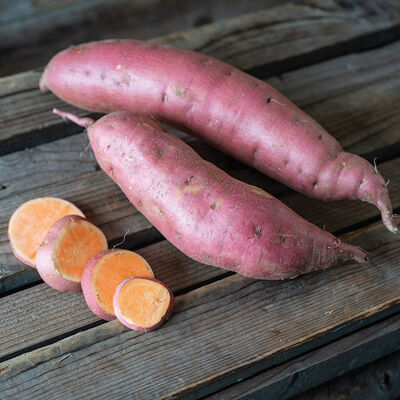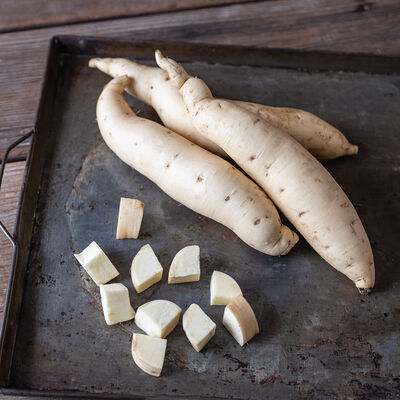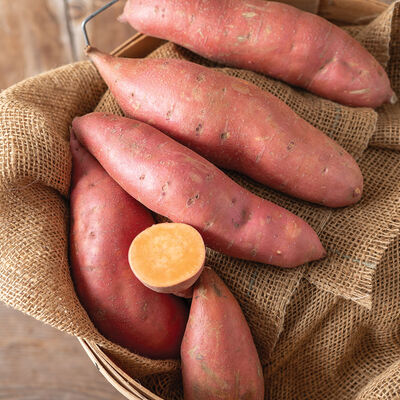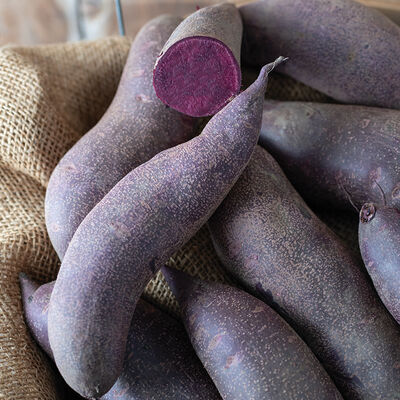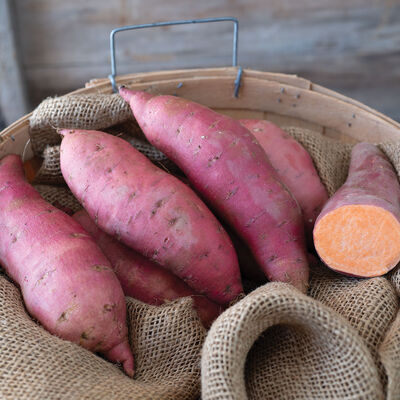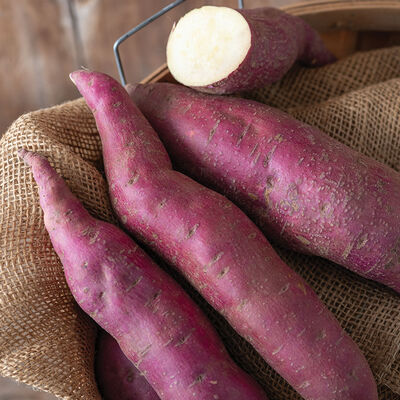
One of the most popular sweet potato varieties.
Dark red-orange skin with moist, sweet, orange flesh. Quick maturing and well adapted to difficult growing conditions. High percentage of usable roots. Excellent choice for cool season areas. Cannot ship to CA. Avg. yield is 3-4 lb. per plant.
Plant Cycle: (A) Days to Maturity or Bloom: 90
This product cannot be shipped to the following states:CA
This product cannot be shipped to Canada
Sweet potato plants ship from mid-April through June for spring planting
Note: Additional shipping charges apply to the sizes listed below, and will be added to your final total.
| Product Size | Zone A | Zone B | Zone C |
| 50 Units | $.00 | $.00 | $115.00 |
Click here for detailed zone information.
We will contact you with shipping pricing if you live in a U.S. Territory, Canada, or an International Area.
Notes:
NOTE: Not approved for certified organic production.
Sweet potatoes cannot be shipped to California.
Sweet potatoes ship by Hardiness Zone from mid-April through June, weather permitting. Please order early to ensure availability.
SHIPPING NOTES: Shipments to HI and AK must ship via UPS 2-day air service (BLX). Please call for shipping quotes.
Watch instructional video on how to plant sweet potatoes.
Additional Information:
Videos:
Disease Resistance:
No disease information found.
Growing Information:
Sweet Potatoes
CULTURE: A well-drained, sandy loam with a pH of 5.2 to 6.7 is best, although any soil that is loose and well-drained should be fine.
SLIPS: You will receive your plants as bare rooted "slips". Expect them to be wilted, and possibly pale green from shipping. This is fine. If unable to plant right away place slips upright in a shaded place protected from rain, sun, wind, or frost. Do not wet leaves, keep roots damp with wet moss, newspaper, or sawdust. They will perk up and be fine for a few days. Once all danger of frost has passed, and weather has moderated, plant slips into 8-16" raised or ridged beds 12-18" apart in rows 3' apart. Keep well irrigated until roots are established. Sweet potatoes do not need hilling like traditional potatoes.
BLACK PLASTIC: In cold regions, plastic mulch may help warm the soil and get the sweet potatoes off to a faster start. Lay plastic as far ahead of planting time as you can.
INSECT PESTS: Sweet potatoes are usually free from major insect attacks. Minor problems could come from Japanese beetles, cutworms, striped blister beetles, or sweet potato whiteflies. Growers in the South may be bothered by the sweet potato weevil. Keeping a clean field and crop rotation will help.
DISEASE: There are a number of diseases that can attack sweet potatoes. Learn which may be a problem in your area. For prevention select certified disease-free slips, practice crop rotation, and plow in or remove vines after harvest.
HARVEST: Carefully dig roots any time after they become marketable size, but before soil temps. drop below 50°F/10°C or before there is a hard frost. If plants get frosted, cut at soil line and harvest as soon as possible. Frost damage will travel from the plants down into the roots, and affect storage quality.
STORAGE: Cure in a warm, well-ventilated area for 8-10 days to toughen skin and heal over any injuries from harvest. Store in a warm (50°-60°F/10°-16°C), dark place. Do not let the temperature drop below 50°F/10°C. While your potatoes are in storage, avoid unnecessary handling.
Symbols Explained:
No additional symbols for this product.