

- Common Brassica Pests & Diseases
- Success with Brassicas | Advice on Timing, Temperature, Fertility & Watering
- Cabbage | Key Growing Information
- Standard Cabbage Types & Varieties | Comparison Chart (PDF)
- Into the Cabbage Patch: Varieties & Culinary Uses | Webinar Recording
- 'Botran' Black-Rot Resistant Cabbage Variety
- Classic Storage Crops | Post-Harvest Handling & Storage Guidelines
- Recommended Cabbage Varieties for Salad, Coleslaw, & Stir-Fries
- What to Look for in Choosing Storage Cabbage Varieties
- Into the Cabbage Patch: Varieties & Culinary Uses | Johnny's Webinar Series
- Cabbage Types & Their Culinary Uses | Johnny's Selected Seeds

Cabbage Types & Their Culinary Uses
By Steve Bellavia, Product Manager, Johnny's Selected Seeds
Cabbage is typically underutilized in U.S. cuisine, in part because typical supermarket cabbage here is not very flavorful; it’s often tough and chewy instead of tender and sweet. The main reason the cabbage you find in the supermarket is so disappointing is that most of those varieties were bred for high yield, durability to reduce bruising in shipping and long term storage rather than for flavor. Asian markets typically have cabbages with much better eating quality. In particular, the flat types generally have exceptionally good eating quality.
At Johnny’s, we avoid varieties that are bred primarily for storage and shipping with little emphasis on flavor. We seek out varieties with exceptional eating quality, good storage, and additionally, we look for varieties that are easy to grow. We have found in our trials that the unique cabbage types—such as pointed and flat cabbages—have some of the best eating quality of all. While most Americans aren’t familiar with these types, the pointed types are popular in Europe and the flat types are popular in Asia and are worth exploring.
Early Fresh Market Cabbages
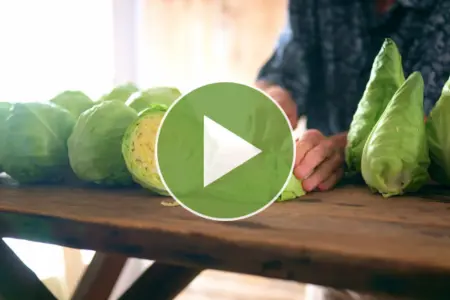
- First Early: Our earliest fresh market cabbages are ‘Tiara’ and ‘Farao’, at 63 and 65 days to maturity (DTM) respectively. Both of these are excellent-crunchy, juicy, sweet, and mild. They are great for making summer salads during the heat of summer when growing lettuce can be difficult. If you like these fresh market types, you can succession plant them and eat them all summer long. These varieties perform very well both in warm summer and cold fall weather.
- Second Early: Our next earliest varieties are ‘Conqueror’ (69 days) and ‘Primo Vantage’ (73 days). Both have excellent eating quality. ‘Conqueror’ is especially adaptable and a good choice in the East, Southeast, and as an overwintered crop in California.
Main Season Cabbage
Our main season varieties are ‘Bronco’ and ‘Botran’.
‘Bronco’ is a widely adapted “workhorse” variety—nearly wherever you grow it and whatever happens, you will still get a decent head of cabbage; it’s very reliable. It is not as flavorful as the early fresh market cabbages listed above, but it still has good flavor (much better than what you find in the supermarket).
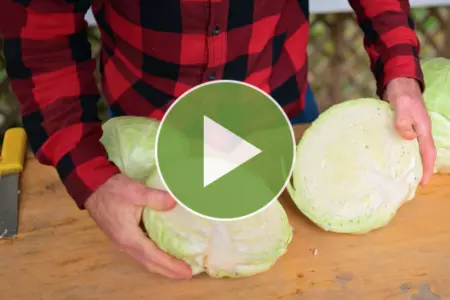
‘Botran’ is only of average for flavor and its primary benefit is its resistance to Black Rot; it is best for customers who have black rot problems. For more information about Black Rot:
Savoy
Savoy cabbage has beautiful, crinkled (“savoyed”) leaves that make these varieties really stand out at the farmstand or market booth. We offer ‘Alcosa’, ‘Famosa’, ‘Clarissa’, and ‘Deadon’. The flavor of Savoy cabbage is quite strong and as such, it is best used for cooked dishes. These types are best when grown in cool weather for fall crops; they can become too strong and bitter when grown in hot weather.
Red Cabbage
Red cabbage generally has a stronger flavor than green cabbages; it has a pleasant spicy or peppery kick to it. As with the savoys, the flavor will be stronger in warm weather than in cool weather. Red cabbage is nice in cooked dishes. It also makes excellent coleslaw when grown in cool weather and even from summer crops in northern parts of the U.S. The slaws may be all red or mixed with green cabbage. Our earliest red cabbage varieties are ‘Primero’ (72 days) and ‘Omero’ (73 days) and our mid-to-late variety is ‘Integro’ (85 days). ‘Integro’ holds well in storage and is both good for fresh use and a nice choice for a red sauerkraut.
Pointed Cabbage
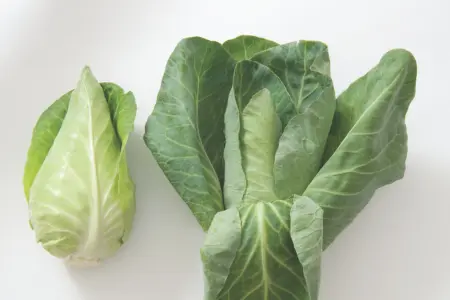
Generally speaking, pointed cabbages have better flavor than the round types. Shown above is 'Caraflex'.
Our pointed cabbage is ‘Caraflex’. Caraflex is very tender, sweet, and crunchy. It is excellent for salads, in slaws, or lightly cooked. Generally speaking, pointed cabbages have better flavor than the round types. In European supermarkets, you will often see cabbage sold shredded in a bag and it will say right on the bag that it was made from pointed-head cabbages; customers know that pointed cabbages have the best flavor and they will pay a premium for it.
Flat Cabbage
Our flat cabbage is ‘Tendersweet’. It has excellent flavor and thin, tender, juicy, crisp leaves that are perfect for light cooking and stir-frying. It also makes a good slaw. If you like softer textured slaw, use ‘Tendersweet’ and if you like your slaw more crunchy, use ‘Caraflex’.
Simple Stir-Fry Cabbage Recipe
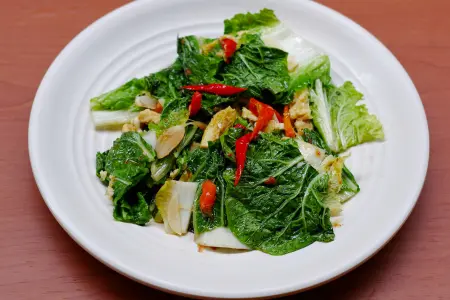
Ingredients
- 1 lb. cabbage or Chinese cabbage
- 1 tbs. olive oil
- Salt, to taste
- Black pepper (or hot pepper flakes)
- Sliced hot peppers
- Sliced garlic cloves or scapes
Instructions
- Quarter cabbage, cut into strips/pieces.
- Heat oil in a wok or skillet
- Add garlic and sliced hot peppers, cook until soft.
- Add cabbage, salt and pepper or hot pepper flakes
- Sauté for a few minutes until it is cooked to your taste
Add other spices such as cumin, fenugreek, coriander, and turmeric for an Indian version of this recipe.
Storage Cabbage
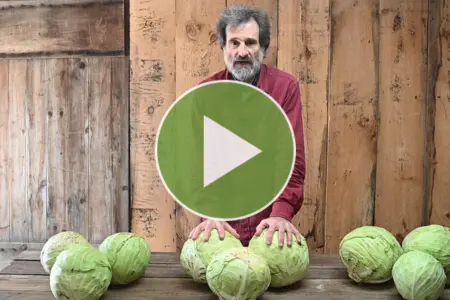
We offer ‘Promise’, ‘Storage #4’, and ‘Typhoon’ for green storage cabbages. ‘Promise’ is our favorite of these three for its flavor, but all three have good eating quality and good storage potential. Our red storage cabbages are ‘Ruby Perfection’ and ‘Buscaro’. The red storage cabbages are good for short to medium term storage but do not store quite as long as the green storage types, which can store until late spring under good conditions.
‘Typhoon’ was bred specifically for making sauerkraut. It has high dry matter, which means you get the most kraut out of every pound of cabbage. Any cabbage can be used for making sauerkraut, but using a high-dry matter type like ‘Typhoon’ increases your efficiency if you are making kraut at a commercial scale.
Sauerkraut Recipe
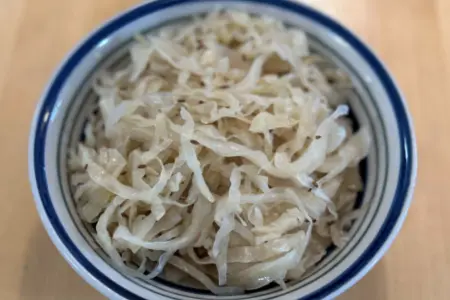
Sauerkraut is very easy to make!
Basic Kraut Ingredients
- 3 tbs. salt
- 5 lbs. cabbage sliced thin, about the thickness of a quarter
- Water as needed
- Seasonings (optional): Juniper berries, caraway seeds, etc.
Instructions
- We recommend this sauerkraut recipe from the National Center for Home Food preservation at the University of Georgia.
Mini Cabbages
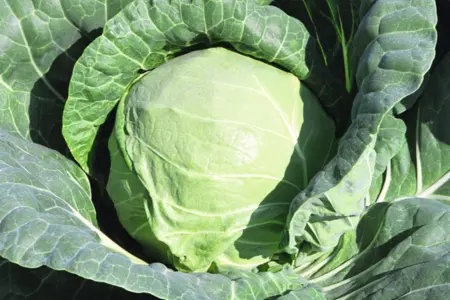
'Tiara' is a mini cabbage tat produces 1–2 lb. round heads. It's always a favorite in our annual taste tests.
Mini cabbages are nice for people who like to eat small or moderate amounts of cabbage. One cabbage is good for 1 or 2 dishes. Our ‘Tiara’ (a round green) and ‘Caraflex’ (a pointed green) make excellent mini heads at close spacings of 8-10 between plants in rows 12-18" apart. Both are great options for summer salads, slaws, and cooked dishes. ‘Tiara’ is one of our favorites, consistently winning blind taste tests on the Research Farm each year.