

- Succession-Planting Interval Chart for Herbs
- Growing Herbs in Containers | Tips for Production of Professional-Quality Container Herbs
- Herb Culture | Comparison Chart (PDF)
- Beyond Cilantro: Top 5 Culinary Herb Trends
- Mouthwatering Combinations: Culinary Herbs + Farm-Fresh Produce
- Destination Herb Farms: Hospitality Farming & Agritourism
- Growing Herb Plants for Direct-Market Sales
- Economic Outlook for Culinary Herbs
- Marketing Herb Plants | Building a Brand for Your Herb Business
- Overwintering Perennial Herbs
- Herb Farming: Tips for Profitable Herb Sales
Herb Farming: Tips for Profitable Herb Sales
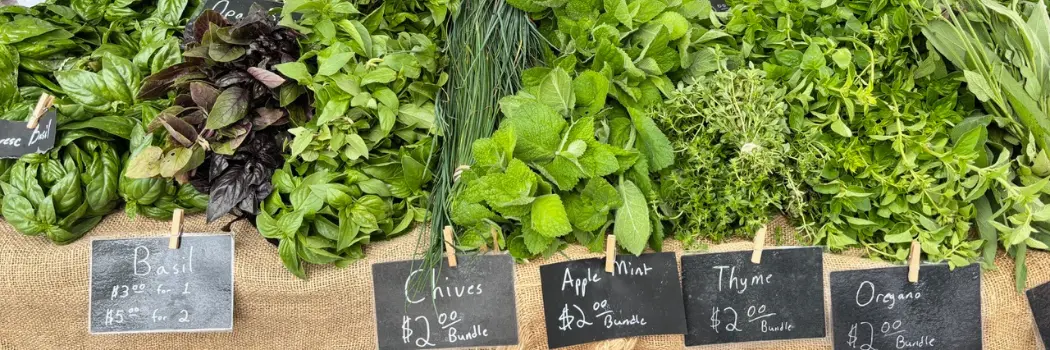
Above: Fresh-cut herbs at a farmer's market. Photo © Lynn Byczynski
By Lynn Byczynski, Author & Founder of Growing for Market
Herbs are often called the useful plants, and with good reason. They are valuable for culinary, cosmetic, medicinal, and ornamental products, offering a world of mercantile possibilities. They can be sold as live plants all season long, sold freshly cut for culinary and craft cocktail use, incorporated into flower bouquets, or dried and used in herbal crafts and wellness products.
If you want a favorable return on your investment, you should visualize your marketing plan before you plant seeds or start cuttings, because your greenhouse production should be tailored to your final presentation.
In this article, we will take a closer look at the most popular market opportunities for herb growers.
Live Herb Plants
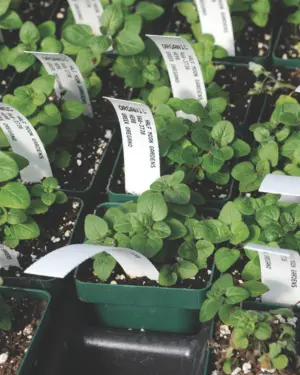
Consider how you are going to transport and display your herb plants.
Live plants are a great option for farmer’s market and roadside stand.
Container Selection
The first thing to consider is how you are going to transport and display your herb plants. That will determine the size and type of containers you will use, which will determine the prices you can charge. With that decision made, you will know how to schedule your plantings to have the right-size plants for the price points you want.
Press-fit trays, which hold the pots securely in the tray, are a good choice for plants that are going to be transported to and from the farmer’s market several times. Another benefit of these trays is that when a customer removes one pot, the others won't fall over. Press-fit trays and the pots that fit into them are available in several sizes, square or round.
Are organic products big in your market? You might want to offer organically-grown herbs in OMRI-approved, biodegradable pots. These fiber pots are available in round, square, or strip pots in a range of different sizes.
Potting Up
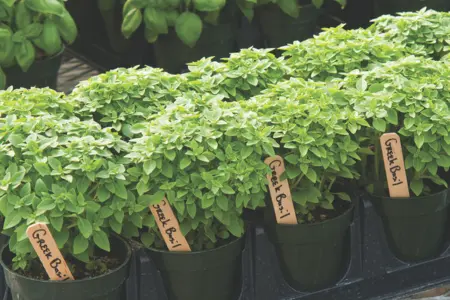
Whether biodegradable or plastic, pots can get bigger as the season unfolds.
Whether biodegradable or plastic, pots can get bigger as the season unfolds, with sales of the smallest pots in early spring for veteran gardeners and 4" pots a month or so later, when less-experienced gardeners decide to buy herbs. They are more likely to achieve success with a larger plant, and therefore more likely to buy again from you next year. However, many garden centers sell herbs in larger pots at high prices so your customers may welcome smaller, less expensive options grown locally.
Don't try to sell herbs that have become seriously rootbound in small pots. Instead, try moving them up into gallon pots or making mixed-herb containers in larger, decorative pots. Herb sales can continue across seasons—if you keep the plants looking healthy.
Mixed Planters
Try mixing up culinary herbs in a seedling six-pack. It's a good way to introduce your home garden customers to the many interesting kinds of basil, sage, or thyme. Or, put together other compatible herbs such as Italian parsley and basil; chives and garlic chives; rosemary and thyme.
For home cooks, pot up large patio containers of mixed herbs, with a few edible flowers such as viola (pansy) and calendula for color. Think about the shape the planting will take once it has matured: place a tall, spiky plant in the center and surround it with mounding and cascading plants in different colors and textures. For best results, combine plants with similar water and sun requirements, such as rosemary, oregano, and thyme, which like it dry, or basils, parsley, and salad burnet, which like more water.
In fall, sell potted herbs in attractive pots that can be brought inside when frost threatens. Focus on the herbs everyone will need for their upcoming holiday dinners: rosemary, sage, and thyme.
Market Display
Don't display your flats of herbs on the ground, where they may not be noticed; put them right at waist level (or up to eye level), where customers can see, touch, and smell them. Fragrance is a strong selling point for herbs.
Planting & Culinary Info for Buyers
Provide customers with variety information and cultural hints, either with purchased plant tags or handmade tags. Create more detailed planting instructions on cardstock or paper to offer customers along with their purchases.
Provide recipes for culinary herbs or note key attributes on the price signs. A flat of Genovese basil, for example, could have a sign that says Makes the best pesto! and the oregano sign could say True Greek Oregano—Known for its aromatic & flavorful leaves. Let customers know why your herbs are special.
Pricing Live Herb Plants
Make prices sensible and easy to understand. Separate live plants according to their price points. You know you need to get more money for the slow-growing, hard-to-propagate herbs like rosemary, lavender, or lemon verbena than you do for easy annuals like basil. Since customers don't necessarily understand the distinction, use different pots or at least different locations for the higher-priced herbs. And if you offer the same herb in more than one size, make sure the higher-priced plants are noticeably larger than the smaller ones.
Fresh-Cut Culinary Herbs
Retail Herbs at Market
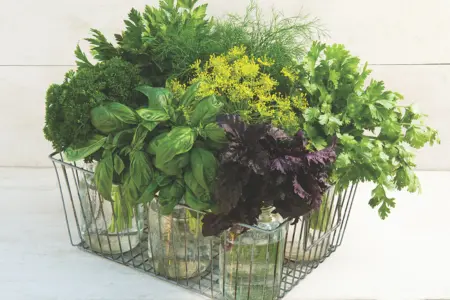
Some growers display herbs in jars of water, like bouquets.
The demand for fresh herbs at the farmer’s market is always strong when sold alongside vegetables. Pair the herbs with compatible veggies such as bunches of basil among the heirloom tomatoes. How you display your herbs will depend on the conditions at your market. If you know your table will be in sun during the market, don’t put all your delicate leafy herbs like basil out at one time—put out a few, and replenish them as they sell. If you have cool conditions, you don’t have to worry about wilting and can display them in abundance. Some growers display herbs in jars of water, like bouquets, while some pre-package them before market.
Variety Selection for Market
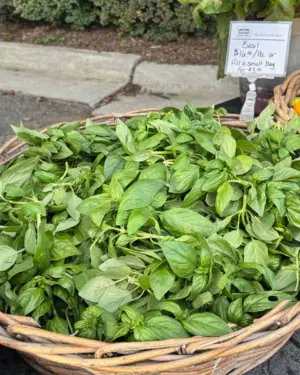
Fresh-cut basil at market. Photo © Lynn Byczynski
Grow the largest plantings of the most popular herbs—which tend to be the annuals like basil, dill and parsley. They can be succession planted just like vegetables to ensure you always have a good supply of fresh product. Perennial herbs like rosemary, oregano, and thyme are also popular, so be sure your planting is big enough that you can harvest from it all season long.
Wholesale Herbs
Restaurants are a great market for fresh culinary herbs. They can be used in the kitchen and at the bar for craft cocktails. Crop selection for restaurants will depend completely on what the chefs and bar managers want, so it pays to get acquainted with those people and see if you can work out a regular arrangement. Once you know how your herbs will be used, offer compatible products such as edible flowers.
Less Common Specialty Items
Some chefs like to purchase the less common culinary herbs in pots that they can keep in the kitchen until they are needed in a recipe. If you're selling cut herbs to chefs, offer to grow herbs such as lemon basil and French tarragon in 4-inch pots. The chefs will get the freshest herbs possible and maybe even some regrowth if they can give the potted herbs sunshine and water between cuttings.
Pricing Fresh Culinary Herbs
As with all farm products, when pricing, you must consider your costs of production AND the going rate in your area. For every crop you grow, do the research to make sure you can make a profit from it. That means checking prices at supermarkets, other farmers markets, and from the vendors in your own market. And consider whether a specific crop is easy to grow at your farm, or needs a lot of pampering. Sometimes it’s smarter to NOT grow a crop.
Medicinal Herbs
Demand for medicinal herbs is booming. Only a small percentage of medicinal herbs used in the U.S. are grown domestically, so there is room in the marketplace for new growers. However, regulation of medicinal herbs and herb products varies state to state, so it’s important to research the rules where you plan to grow and sell. Market possibilities include selling the potted or fresh cut medicinal herbs direct to consumers, making your own line of products, or selling to other businesses that make herbal medicines. Each is its own business, so explore carefully before you decide what to grow.