

- 10 Ways to Extend Your Season with Protected Cultivation
- QuickHoops Gothic High Tunnel Bender | Construction Manual for Modular Moveable Gothic High Tunnel (PDF)
- QuickHoops Gothic High Tunnel Bender | Construction Manual for Stationary Gothic High Tunnel (PDF)
- QuickHoops High Tunnel Bender | Construction Manual for Building a Stationary High Tunnel (PDF)
- QuickHoops Low Tunnel Benders | Instruction Manual (#9377 & #9520) | (PDF)
- Agribon+ AG-19, 30, 50 & 70 Row Cover | Insert (PDF)
- Hitch Mount for QuickHoops Low Tunnel Benders | Instruction Manual (PDF)
- Bobcat Automatic Ventilation Kit Manual (#6791) | Tech Sheet (PDF)
- Bobcat Pro High Tunnel Kit Manual (#6794) | Tech Sheet (PDF)
- Bobcat Pro High Tunnel Kit (#6794) | Parts List (PDF)
- Bobcat Sliding Door Kit Manual (#6792) | Tech Sheet (PDF)
- Bobcat Standard High Tunnel Kit Manual (#6795) | Tech Sheet (PDF)
- Bobcat Standard High Tunnel Kit (#6795) | Parts List (PDF)
- Bobcat Steel End Wall Kit Manual (#6793) | Tech Sheet (PDF)
- Truss Support Kit Manual (#6790) | Tech Sheet (PDF)
- Bobcat Tunnel Kits | Comparison Chart
- Beginning & Intermediate Controlled Environment Agriculture (CEA) | Advances in Greenhouse Crop Production
- 5 Cool Flowers to Plant Now | Lisa Mason Ziegler's Secrets for Growing Hardy, Cool-Season Annuals
- Hoop Loops | Installation Instructions | Tech Sheet (PDF)
- Introduction to Overwintering Flowers | Guide to Overwintering Flowers
- Overwintering Perennial Herbs
- Protect Your Crops | High & Low Tunnel Basics
- The Effect of Shorter Daylength on Winter Production
- Be First & Last to Market by Extending Your Growing Season
- Quick Hoops Low Tunnels | Set-up & Management with Eliot Coleman
- Constructing the Modular Moveable Gothic Tunnel – Animated Schematic
- Moving the Modular Moveable Gothic Tunnel – Slideshow
- Skinning the Modular Moveable Gothic High Tunnel – Slideshow
- Overwinter Flower Trials | Multiyear Results for 30+ Crops | Johnny's Selected Seeds | XLSX
- Seeding Date Calculator | Johnny's Recommended Flowers for Overwintering | XLSX
- Overwintering Onions for Spring Harvest | Johnny's Selected Seeds
- Winter Growing Guide | Part 5: Overwintering Planting Dates
- Pest & Disease Control Basics in Greenhouse, Hydroponic & Other Protected-Culture Systems
- Pests & Diseases of Greenhouses & Hydroponic Systems | Tech Sheet (PDF)
- Why & What to Grow in a Greenhouse? Basics of Protected Culture
- Recommended Varieties from Our Greenhouse Trials | What We Look for in Greenhouse Crops
- Recommended Varieties from Our Greenhouse Trials | What We Look for in Greenhouse Crops
- QuickHoops 3'W x 4.5'H Low Tunnel Bender (#7616) | Instruction Manual (PDF)
- QuickHoops Moveable High Tunnel Bender | Instruction Manual (PDF)
- QuickHoops Seedling & Microgreens Bench | Construction Guide (PDF)
- Row Cover & Insect Netting Options & Uses | Comparison Chart (PDF)
- Tufflite IV Greenhouse Film | Comparison Chart (PDF)
- Univent Automatic Opener for BiFold Doors | Instruction Manual (PDF)
- Johnny's Season Extension & Overwintering Trials
- Planning & Planting the Autumn Vegetable Garden | Tips & Recommendations with Niki Jabbour
- Growing Under Cover with Niki Jabbour | Webinar Recording
- DIY Cold Frame • Easy How-to Tutorial with Niki Jabbour
- Tips & Crop Recommendations for the Autumn and Winter Cold Frame • Tutorial with Niki Jabbour
- How to Use Quick Hoops™ Benders to Create High & Low Tunnels
- The Benefits of Row Covers | Recommendations & Tips
- Hoop Houses & Other Ways to Extend Your Growing Season
- Take a Tour with Us of Johnny's Greenhouses!
- Growing Under Cover with Niki Jabbour & Johnny's | Johnny's Educational Webinar Resources
- Johnny's Winter Growing Guide | Printable Brochure (PDF)
- Winter Growing Guide | Part 2: Production in the High Tunnel
- Winter Growing Guide | Part 1 - Introduction
- Winter Growing Guide | Part 3: Overwintering in Low Tunnels
- Winter Growing Guide | Part 6: Recommended Crops & Varieties
- Winter Growing Guide | Part 4: Planting Dates for a Winter Harvest
- Radishes in the Winter Tunnel for Overwintering & Winter Harvest | Johnny's Selected Seeds
- Webinar Slide Deck | Overwintering Flowers | 41-pp PDF
- Choosing Flower Crops to Overwinter | Guide to Overwintering Flowers
- When to Start Seeds for Overwintered Flowers | Guide to Overwintering Flowers
- Gardening in a Cold Frame With Niki Jabbour
- Irrigation Considerations for the Overwinter Flowers Tunnel
- Winter Sowing & Milk-Jug Greenhouses | With Niki Jabbour & Johnny's
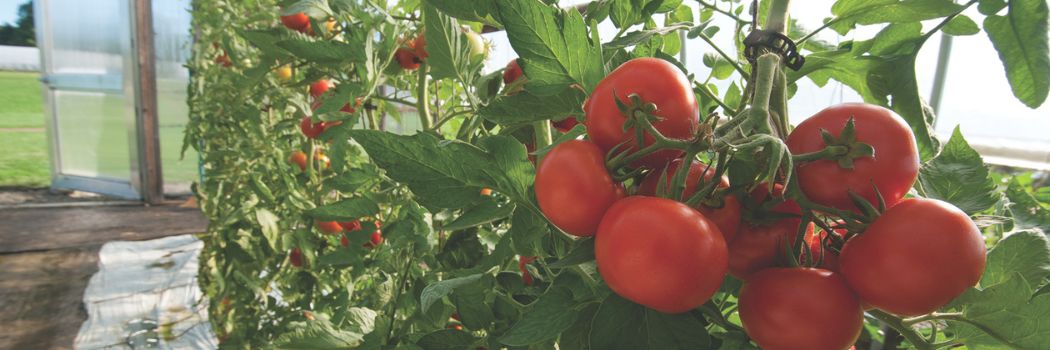
Trial Criteria for Johnny's Greenhouse Performers
What Makes a Variety Right for the Greenhouse?
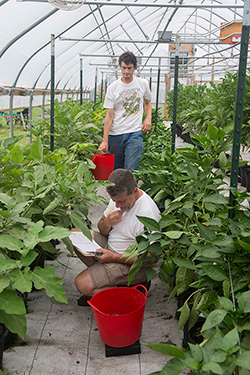
Collecting trial data at the Research Farm
Of the innumerable benefits of greenhouse culture, at the top of many growers' lists are season extension, better yield and quality, and protection from adverse weather and pathogens.
Growing within a protected environment does carry its own set of challenges, however, including space limitations, pinpointing the right variety/nutrient/light/irrigation recipe, more intensive plant maintenance, and increased risk of diseases specific to greenhouse conditions. Crops need to perform particularly well to deserve placement in the valuable real estate of a greenhouse.
The Research Team at Johnny's Selected Seeds is committed to trialing and selecting crops well-suited to the greenhouse environment. Over the years we've honed our process for identifying top performers, learning how to distinguish them from varieties better off grown in the field. Here are some findings from our team, including specifics on what to look for, along with some variety recommendations.
Above & Beyond Flavor—What We Look For
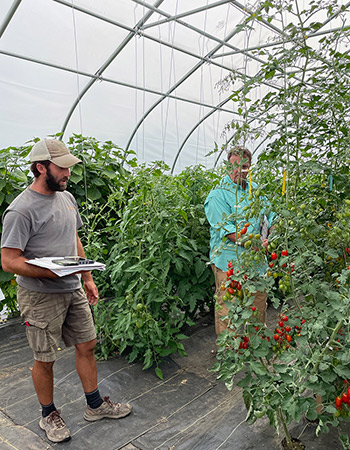
Tomato Trial Technician Daniel Yoder and VP, R&D Kevin Cook deliberate the greenhouse tomato trial.
Our Research Team conducts variety trials at our Research Farm in Albion, Maine, and in addition, for specific targets, we conduct regional trials with growers and university researchers across the US to develop a more complete picture of variety performance and applicability to specific regions. In keeping with the practices of many of our customers, most of our greenhouse trials on the Research Farm are grown in unheated, plastic-sided “high tunnels,” where the plants are grown directly in the soil.
Although a greenhouse provides a highly controlled, protected, and beneficial growing environment, not all varieties benefit from these conditions. Varieties bred to grow well in a field or garden plot may not perform as well when grown in a greenhouse; conversely, there are many varieties bred specifically to perform their best in a greenhouse environment—so many in fact, that each year on average, Johnny's staff trials roughly 100 varieties of greenhouse tomatoes, 60 different varieties of greenhouse pepper, 50 varieties of greenhouse cucumber, 50 varieties of greenhouse lettuce, and 20 varieties of greenhouse eggplant!
Just what are we looking for when we trial varieties in protected culture? Above all, we want varieties that taste good. Beyond excellent eating quality, we use crop-specific evaluation criteria that consider disease pressures and agronomic qualities unique to each crop.
Our Greenhouse Symbol

At Johnny's we breed, trial, and select for the best genetics possible, to offer greenhouse growers the most consistently reliable varieties to grow under conditions specific to greenhouse culture. Once a variety has proven itself in Johnny's trials, it is designated by a greenhouse symbol. You can be confident that when you see the little Greenhouse Performer symbol next to a variety in our catalog or on our website, it has been carefully trialed and identified as deserving a place within the limited footprint of your greenhouse environment.
We are committed to providing superior greenhouse varieties to help you make the most of that valuable undercover, greenhouse, or hoophouse real estate. In this next section, our Research Team shares some of our greenhouse vegetable trial findings, recommendations, and favorites.
Johnny's Greenhouse Performers: Recommended Crops
1 • Cucumbers for Greenhouse Production
Cucumbers are a top crop that’s well suited for protected culture, providing a respectable return on the investment required. The desirable attributes we seek in greenhouse and high tunnel cucumbers include:
- Exceptional vigor to grow over a long season.
- Good resistance to common diseases of protected environments.
- Overall high yields to justify the use of the structure.
- Exceptional eating quality with less bitterness, no seeds, and thinner skins, a combination not easily achieved in field production.
- Parthenocarpic and gynoecious reproductive habits to ensure high yields and good fruit development in an enclosed growing environment.
- Plants have been bred specifically to produce fruit on the main vine, allowing for trellising and pruning systems to be used.
Growing greenhouse cucumbers requires very different techniques compared to typical field production methods, and may require a bit of a learning curve for first-timers. To learn how to trellis and prune your greenhouse cucumbers, refer to our tech sheet on Greenhouse Cucumber Production, and watch our tutorial video on Lowering & Leaning Your Greenhouse Cucumbers.
Top Picks: Recommended Cucumbers for Greenhouse Production
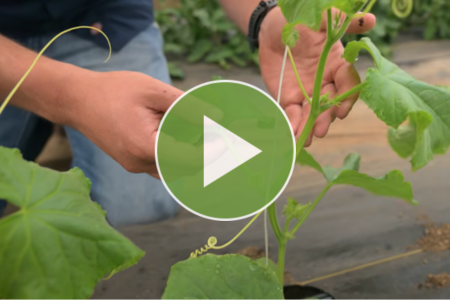
Demeter video
- ‘Corinto’ is one of our favorite greenhouse cucumbers and one of the most vigorous cukes we have ever seen. (It may outgrow everything else in the greenhouse.) It offers good disease resistance and high yield potential. It is also well adapted to stressful conditions, which can plague high tunnel growers in the cool shoulder seasons and in the peak heat of summer. Combine these features with its flavor and familiar slicer appearance, and you have a winner for protected culture.
- ‘Demeter’ is an exciting option for growers who are short on labor, or who find themselves falling behind on their pruning regimen. ‘Demeter’ has a unique low-prune plant habit with reduced suckering. ‘Demeter’ is early and high yielding, and has strong disease resistance and good fruit quality.
- 'Itachi' will bring a striking and unique look to your farmers market display. Great tasting, attractive, and highly productive, this variety produces uniform yields of sweet, crispy, bitter-free cucumbers with small seed cavities and bright white coloration.
- 'Katrina' is our recommendation for a thin-skinned, bitter free greenhouse cucumber. The fruits are tasty and mild—popular with kids and anyone who likes a less-bitter cucumber. High yielding and prolific, this variety produces! Fruit averages between 6–7", a nice medium size between the smaller snacking types and the larger 'Socrates'.
- Our Limelight Trio (‘Margarita’, ‘Mojito’, and ‘Gimlet’) are a complementary trio of lime-green greenhouse cucumbers with exceptional eating quality. All three have a more crisp texture and sweeter, citrusy flavor with no bitterness. We’ve found that customers who try them associate their distinctive appearance with the improved eating quality, and come back for more.
- 'Sashimi' is our newest long Asian-type cucumber specifically bred for greenhouse production. Along with the excellent crisp and flavorful eating quality expected of this type, 'Sashimi' is both parthenocarpic and gynoecious, uncommon for a long Asian cucumber. It also has excellent PMR (powdery mildew resistance), a huge improvement over older varieties of this type. 'Sashimi' maintains its crispness and a uniform shape over a wide range of sizes, so you can harvest at anywhere from 8–12" in length.
- 'Unagi', which is a unique cross between a Beit Alpha and traditional Japanese cucumber, is our absolute favorite greenhouse cucumber for eating quality. The spineless and seedless fruits are so tasty that we use this variety as our benchmark for flavor in the greenhouse trials. This variety produces excellent yields of straight, glossy, and uniform cucumbers.
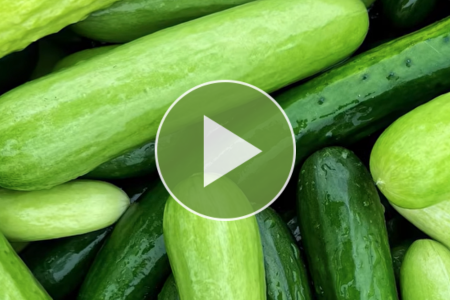
Limelight cucumbers video
2 • Eggplant for Greenhouse Production
Eggplant is another fruiting crop popular for greenhouse production. Most varieties of eggplant are suitable for low-tech tunnel growing on a simple basket-weave trellis system. For more advanced greenhouses, growing eggplant indoors in a trellis system with a restricted number of leaders can provide steady yields of clean, quality fruit. Greenhouse eggplant can be harvested at a baby 1/2-lb size or mini 1/4-lb size, or can be left on the plant to grow to full size.
For cultural recommendations, see our tech sheet on Greenhouse Eggplant Production.
The traits we look for in a greenhouse eggplant variety include:
- Fast, vigorous growth for high yield.
- Fruit with good flavor, appearance, and quality.
- Resilience to wide fluctuations in temperature.
Recommended Eggplant Varieties for Greenhouse Production
- 'Annina' is another variety that performs well in both high tunnel and open field production systems. The spineless fruits have a striking purple-and-white striped appearance, which looks great on its own and when sold in combination with a black and a white type. This variety has high yields and excellent uniformity.
- 'Aretussa' is a smooth-skinned white eggplant with a slender teardrop shape and spineless green calyxes. Plants yield uniform fruit prolifically in both heated and unheated structures, as well as in the field. White eggplants tend to be sweeter, with less bitterness than other types, and 'Aretussa' is no exception— sweet, creamy fruit and excellent flavor make this variety stand out on its own merit.
- 'Gaudi' can be grown both indoors and outdoors with good results. It is a prolific yielder of glossy fruits with attractive teardrop shape. Spineless, widely adapted, and stress tolerant, the fruit will keep their dark black color through and after harvest.
- 'Turkish Delight' is a parthenocarpic variety, ensuring no seeds when grown in an enclosed greenhouse structure. Prolific yields of highly uniform, straight fruit with rich flavor and no spines.
3 • Lettuce for Greenhouse Production
As a crop that prefers cooler temperatures and lower light intensities, lettuce is highly suited for winter greenhouse growing. In addition, lettuce has fairly adaptable cultural requirements and a favorable profit potential. The very cool temperatures and low-light conditions common to the lower-tech winter greenhouses and high tunnels can, however, lead to disease, especially downy mildew, as well as loss of color in red lettuce varieties.
Lettuce in High-Tech Greenhouses & Hydroponics
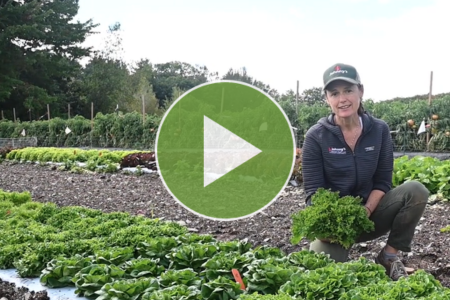
Salanova lettuce video
For hydroponics and high-tech CEA (controlled environment agriculture), the traits we look for in lettuce varieties include:
- Ability to do well under low-light conditions, demonstrating good pigmentation under low light
- Disease resistance, especially powdery mildew, downy mildew, and Fusarium wilt
- Resistance to bolting and tipburn
Top Picks: Recommended Lettuce Varieties for High-Tech Greenhouses
Salanova® is the industry standard for one-cut lettuce, offering versatility, efficiency, and high value. Johnny's Hydroponic line of Salanova varieties are proven performers in indoor systems, with a combination of strong color retention, bolt resistance, and speed.
Lettuce in Low-Tech Tunnels
For in-ground production in low-tech tunnels and greenhouses, we look for the following:
- High vigor and rapid bulking for colder conditions and low light levels
- Disease resistance (especially powdery mildew and downy mildew)
- Good color expression
- Good texture retention under variable temperatures
- Compact frame
Top Picks: Recommended Lettuce Varieties for Low-Tech Tunnels
- Our 'Five Star Greenhouse Lettuce Mix' has strong Downy Mildew resistance, good color retention under low light levels, and uniform growth rates. Varieties in this mix were selected for their strong Downy Mildew resistance, good color retention under low light levels, and uniform growth rates. It's the best mix for baby lettuce and salad mix during the short days of winter.
- ‘Gatsbi’ is an adaptable mini gem-type with slowness to bolt, high vigor, strong tipburn resistance, and larger frame provide protection against stressful conditions and extreme temperatures.
- Our trio of mini-head Romaine lettuces, ‘Breen’, ‘Dragoon’, and ‘Truchas’ thrive in the low-tech greenhouse and make an attractive display when marketed together. In true Romaine fashion, these minis are crisp and juicy, with a sweetness unmatched by other lettuce types.
- Salanova® Lettuce is another star in our low-tech greenhouse trials. To learn more about this high-yielding, versatile lettuce, see our brochure on Salanova, the Ultimate Efficiency Lettuce, or watch our video on the Advantages of Growing Salanova®.
4 • Peppers for Greenhouse Production
All peppers will benefit from indoor growing, especially if they are being grown to the fully ripened color stage. Any of our peppers are suitable for low-tech tunnel growing, in that they will produce higher-quality fruit than when grown in open field conditions.
Bell peppers in particular are one of the most widely grown greenhouse crops. Because field production of bell peppers can be a challenge and returns on premium-quality bells can be good, they are a natural fit in many growers' greenhouses.
Peppers are far less able to overcome suboptimal temperatures than a more vigorous crop like tomatoes can. For this reason, we recommend temperature control for best results. In other words, some greenhouse heating may be required to prevent cold stress in a pepper crop. Likewise, temperatures of approximately 95°F (35°C) and above can cause sterilization of pepper pollen, so we recommend growers ensure adequate venting as well, to prevent ambient temperature from reaching this high.
The traits we look for in a good greenhouse pepper include:
- Good fruit-setting under high and low temperatures—some pepper varieties drop blossoms in temperature extremes.
- Early-maturing varieties with attractive ripe coloration.
- Big, blocky peppers with good flavor and excellent fruit quality to ensure a premium price at market.
- High level of vigor to keep the plant growing and the yields high over a long season.
Recommended Pepper Varieties for Greenhouse Production
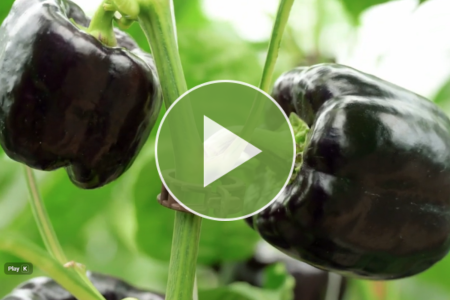
'Lilo' purple pepper
- ‘Amaretto’ is a bright yellow bell pepper with early vigor and strong, tall plants.
- ‘Frodo’ is an extra-large Lamuyo-type bell pepper. ‘Frodo’ produces premium quality fruit that are much more flavorful than a typical bell. Lamuyos are quite popular in southern Europe and have been increasing in popularity in California, where they are enjoyed for their striking appearance and excellent eating quality.
- ‘Lilo’ is a beautiful dark purple bell that eventually ripens to red. ‘Lilo’ produces high yields indoors with and without heat.
- ‘Milena’ is an orange bell with very good flavor and resilient plants.
- ‘Nebula’ is an early red bell pepper with high yields of attractive, uniform, medium-sized blocky fruits.
- ‘Nova’ is an orange bell with excellent yields of medium-large to large fruit.
- ‘Sprinter’ is a red bell with high yields of beautiful, large, dark red fruit.
- ‘Snowball’ is a high yielding bell which progresses from an ivory to a golden yellow as the fruit matures. Flavor is mild when ivory, and sweet and fruity when golden.
While these varieties will perform well when trellised using simple basket-weave methods, additional labor efforts applied to pruning and trellising improves overall plant health and fruit quality and increases the longevity of the crop. For more details, see our technical instructions for Greenhouse Bell Pepper Production.
5 • Tomatoes for Greenhouse Production
Tomatoes are among the most popular crops for high tunnel and greenhouse production for many reasons:
- They will produce earlier and last later in the season compared to when grown in the field.
- Quality is generally much better than field-grown because they are protected from weather-related damage (such as splitting, or diluted flavor from heavy rain), which results in higher marketable yields. Additionally, protected culture provides some protection from diseases exacerbated by wet foliage, such as early and late blight.
- Most importantly, tomatoes are a high-value crop in many markets, and they can produce a steady crop over a long period. A single planting can thus provide a high return on investment with regular maintenance.
That said, the high-temperature, high-humidity greenhouse environment is conducive to a different set of diseases, including leaf mold, powdery mildew, fusarium crown and root rot, corky root rot, and botrytis. These fungal diseases can spread very rapidly in the close quarters of indoor tomatoes. Soilborne pathogens can build up large populations if tomatoes are grown regularly in the same hoophouse ground; often the high value of tomatoes and limited greenhouse space entices producers to grow them continuously year after year in the same greenhouse, without rotating to less valuable crops to break disease cycles. Additionally, symptoms of the tobamoviruses (tobacco mosaic virus and tomato mosaic virus, or TMV and ToMV, respectively) are exacerbated by the reduced light transmission found in greenhouses and high tunnels.
In evaluating dozens of tomato varieties each year for greenhouse culture, Johnny's looks first for four principal sets of qualities:
- Exceptional vigor and higher yield over a longer season at hotter temperatures than those in the field.
- Resistance to the diseases mentioned above, which are less commonly seen in field production.
- Less aggressively vegetative, more "polite" plant habits, which reduce the need for pruning and allow better airflow amongst the plants.
- As always, the best flavor and texture possible.
Top Picks: Recommended Tomato Varieties for Greenhouse Production
Hylooms
For those who favor classic heirloom appearance and flavor, hyloom varieties are hybrid tomatoes that look and taste very much like their heirloom counterparts—but with improved resistance to disease pressure and higher yield potential.
The benefit the hyloom tomatoes confer to the grower is in producing fruit with eating quality equivalent to heirlooms' but on higher-yielding plants, due to better vigor and disease resistances, allowing the plants to live longer and stay healthier. By way of comparison, many greenhouse growers report heirloom yields of one-third to one-half of what they get off red greenhouse beefsteaks—a potentially money-losing proposition.
A few standout hyloom varieties include:
- ‘Bonbolya’ is a pink beefsteak with a sweet, low-acid flavor and an attractive pink color. Unlike other similar varieties where production and fruit size flag as the season progresses, Bonbolya’s strong, well-balanced plants have excellent fruit set and maintain consistent 8–10 oz. fruit size over a longer life cycle.
- ‘Hot Streak’ produces vibrant, eye-catching fruit that stand out in a market stand. Firm red fruit develop more pronounced yellow striping as they ripen, and have outstanding flavor, good sweetness, and a longer shelf life. The nice, balanced plant has a broad disease resistance, making it a good candidate for the tunnel.
- 'Kakao' is has a distinctive appearance and a flavor all its own. 'Kakao' has the black tomato look in a smaller package, with uniform, round fruits between 4½–5½ ounces. Its iconic dark looks, soft flesh, and savory flavor — almost as though it had been sea-salted—lend it instant recognition for standout branding.
- 'Marbonne' represents the classic French 'Marmande' heirloom type, with rich scarlet skin and a crown accented by deep ribs. Because this type is so popular throughout Europe, there are actually several hybrids on the global market that resemble the original 'Marmande,' but we have found 'Marbonne' to be the best of the lot. It is very early maturing (as are most 'Marmande'-types), and is the highest yielding of the French Heritage tomatoes. It is also arguably the sweetest and most universally appealing in flavor. There is no wrong way to prepare 'Marbonne'!
- 'Margold' preserves the look and flavor of the red-streaked yellow heirlooms, while adding leaf mold resistance, improving fruit uniformity, and improving marketable yield. Its very soft flesh has sweet and mild tomato flavor and thick, juicy texture, with an appearance similar to 'Striped German.' It's a great BLT or burger-topping tomato.
- 'Marnero' keeps the best attributes of the black tomatoes, while again, improving upon disease resistance and yield. A dead ringer for 'Cherokee Purple,' its flesh is also very soft, with the complex flavor and meaty texture you would expect from your favorite "black tomato" heirlooms. 'Marnero' stands out in Caprese salad, fresh pico de gallo, or any other preparation where raw tomato is the focus of the dish.
Specialty
'Clementine' is a unique orange cocktail tomato from the Johnny’s breeding program. It matches well with the popular 'Mountain Magic', both offered in certified-organic seed. 'Clementine' features short leaves and a polite, open habit that fits well in close quarters and ventilates well. Clementine does not have resistance to Leaf Mold however, which can be a problem for some greenhouse growers.
Slicer
- 'BHN 589' is the variety we recommend trying first if you are getting into determinate tomato production under cover. Its semi-determinate plants are larger than a compact determinate, but still low-maintenance- perfect for basket-weaving in a hoop house. 'BHN 589' offers a surprising combination of high yields, excellent fruit quality, long shelf life, and really good flavor.
- 'Estiva' has been a fixture in Johnny's catalog for a long, long time. We simply haven't found anything else with its combination of production and quality. Bred for low-tech indoor production in southern France, 'Estiva' cranks out loaded clusters of remarkably uniform fruit in the versatile 6–7-ounce size range. The color is deep red and the flavor and texture are outstanding. 'Estiva' is very vigorous, but the plant habit is well balanced and thus highly suitable for unheated greenhouses. Resistance to soilborne pathogens and TMV are a nice added bonus.
- ‘Unity’ is an excellent variety for early production in a greenhouse tomato program. While it doesn’t have the longevity of some other red beefsteaks, it is quick to produce high-quality fruit with a medium-firm texture and mild tomato flavor well ahead of later varieties that begin to pick up production after Unity begins to wind down. Fruits are clean and attractive, with a light green shoulder and strong interior coloration.
Cherry
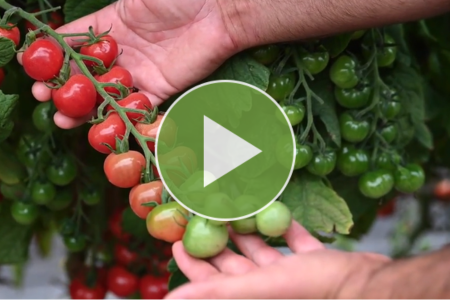
'Mochi' is our tomato Product Manager Nate Gorlin-Crenshaw's favorite cherry tomato for eating.
“I’ve tried literally hundreds of different tomatoes at this point, and have yet to find another one with a texture like Mochi; The name is apt—the fruit have the soft, springy, “Q-texture” of their namesake, coupled with a dessert-like sweetness. They’re beautiful too—the skin has a unique glossiness to it that lets me pick it out of a lineup of red cherry tomatoes every time. The plants are compact but vigorous, and grow well in a greenhouse or staked outside, and despite the high sugar content, the fruit’s unique skin never cracks. It’s truly my favorite cherry tomato.”
- ‘Attracta’ has rugged but not overly-vegetative plants with tolerance to cooler conditions. It produces heavy yields all season long. Long trusses of dark-red cherry tomatoes can be picked either loose or on the vine, and have great tomato flavor and sweetness..
- ‘Mochi’ is a unique cherry tomato with a glossy red skin and an entirely new texture. ‘Mochi’ does not burst in the mouth; it evokes a gumdrop-like eating experience. It’s also our tomato Product Manager Nate Gorlin-Crenshaw's favorite cherry tomato for eating: “I’ve tried literally hundreds of different tomatoes at this point, and have yet to find another one with a texture like Mochi; The name is apt—the fruit have the soft, springy, “Q-texture” of their namesake, coupled with a dessert-like sweetness. They’re beautiful too—the skin has a unique glossiness to it that lets me pick it out of a lineup of red cherry tomatoes every time. The plants are compact but vigorous, and grow well in a greenhouse or staked outside, and despite the high sugar content, the fruit’s unique skin never cracks. It’s truly my favorite cherry tomato.”
- 'Sunpeach' is a very tasty pink cherry tomato from Japan, out of the same breeding program that produced Sungold. 'Sunpeach' has leaf mold resistance and easy-access clusters hung on a well-behaved vine. Its unique color is perfect for mixed quarts. Fruit have a lower-acid flavor profile and plenty of sweetness.
Paste
'Granadero' has a broad disease package, compact plant, and huge yields of blemish-free fruits, making it an excellent choice for Roma tomatoes in just about any growing system, including unheated greenhouses and high tunnels. 'Granadero' was selected specifically for performing in organic systems, so you know it's a tough customer. It features the VFNT disease package, with added resistance to powdery mildew, a problem increasingly seen in protected-culture tomatoes.
Finally, for those growers who have lower-tech hoophouses, are just starting to try greenhouse production, or want to stick with familiar varieties, or who are especially conscious of price, see our Top-10 Field Tomatoes to Try in Your Tunnel, as there are some field varieties our trialing has shown can do well in certain styles of protected culture as well.
Learn More
Grafting Tomatoes and Cucumbers for Greenhouse Production
Grafting is a cultural technique widely used in intensive cropping systems such as high tunnel and greenhouse production. Grafting involves sowing two sets of seedlings: the scion, which will be the top of the future grafted plant, and is selected for its fruit qualities, and the rootstock variety, selected for vigor and disease resistance. When the seedling stems (also called hypocotyls) of each set reach approximately the same diameter and their first true leaves emerge, the stems are cut and the scion tops are attached to the rootstock bottoms with a clip to hold them together. After this bit of surgery, the newly grafted plants are then immediately put into a dark, warm, and humid healing chamber to knit together. The tissues of the scion and rootstock grow together and heal over, leaving a grafted plant.
While the primary purpose of grafting is often to solve problems with soil-borne diseases, the technique also provides other advantages, such as better plant vigor and longevity, as well as improved fruit size in later harvests, and higher yields.
If you can make the initial investment of time and space, grafting your own tomato or cucumber plants can provide a very cost-effective solution. To support grafting, Johnny's offers several rootstock tomato varieties, a rootstock squash variety for cucumber grafting, and grafting tools, and for comprehensive educational materials for this modality, see our Tomato Grafting Webinar Resources and Cucumber Grafting Webinar Resources.
Cucumber Grafting
- Cucumber Grafting: Advantages, Materials, Technique Article
- Cucumber Grafting Webinar Resources
- Grafting Cucumbers • Advantages, Materials, Technique Tech Sheet PDF
Tomato Grafting
- Side-Grafting Tomatoes • Advantages, Materials, Technique Tech Sheet PDF
- Top-Grafting Tomatoes • Advantages, Materials, Technique Tech Sheet PDF
- Tomato Grafting Webinar Resources
- Video: Tomato Top-Grafting Demo: Splice Grafting & Cleft Grafting • Materials & Technique
Additional Articles
- Why Grow in a Greenhouse? Basics & Advantages Article
- Beginning & Intermediate Controlled Environment Agriculture (CEA) • Advances in Greenhouse Crop Production Article
- Cucumber Grafting: Advantages, Materials, Technique Article
- Trellising Hoophouse Tomatoes Article
- Growing Fruit Under Cover Article
Webinars
Tech Sheets
- Top-Grafting Tomatoes • Advantages, Materials, Technique Tech Sheet PDF
- Side-Grafting Tomatoes • Advantages, Materials, Technique Tech Sheet PDF
- Grafting Cucumbers • Advantages, Materials, Technique Tech Sheet PDF
- Greenhouse Cucumber Production Tech Sheet PDF
- Cucumber Types & Terminology Tech Sheet PDF
- Greenhouse Eggplant Production Tech Sheet PDF
- Greenhouse Bell Pepper Production Tech Sheet PDF
Video
- Take Our Virtual Greenhouse Tour Video
- Video: Tomato Top-Grafting Demo: Splice Grafting & Cleft Grafting • Materials & Technique
- How to Lower & Lean Greenhouse Cukes Video
- Cucumber Pruning Video